Learn
What a good car detail should look like
Short answer: judge it against photographs you took yourself before anyone arrived, and check the car in the driveway while the detailer is still standing in it. Those two habits are worth more than any review, and they work on any detailer, this one included.
By Zachariah, owner of SoloSpa ·
You are about to give your car keys to someone you found on Google or Facebook Marketplace, and pay them before you have any way of judging what they did. That is an uncomfortable position, and people in GTA threads describe landing in it badly:
“So, the last time I went to get my car detailed, the guy basically ripped me off. Took like 200$ from me and there was no detailing or whatsoever when I went to pick up my car… I was looking to get surprised by seeing my car feeling brand new but I was utterly disappointed.”
That is from a public r/askTO thread, and the reason it stays unresolved is not that the work was definitely bad. It is that nobody can tell any more. Once the car has been washed there is no version of it left to compare against.
Below is the standard we would want a member of our own family to use. SoloSpa is a detailing business and we would like your work, but this checklist is written to work on anybody. If you use it on a detailer who is not us and it saves you a bad afternoon, the page did its job.
Photograph the car before anyone arrives
This is the single highest-value thing on this page and it takes about two minutes.
Detailers who have watched these arguments play out say the same thing. From the same set of public threads: “Before pictures are an absolutely essential.” And: “Without ‘before’ picts it’s hard to tell how much work was done.”
Take your own. Do not rely on the detailer to take them, and do not rely on your memory, because a week later you will genuinely not remember whether that mark on the door card was there before. Your phone timestamps every shot, which is what turns them into a record rather than an opinion.
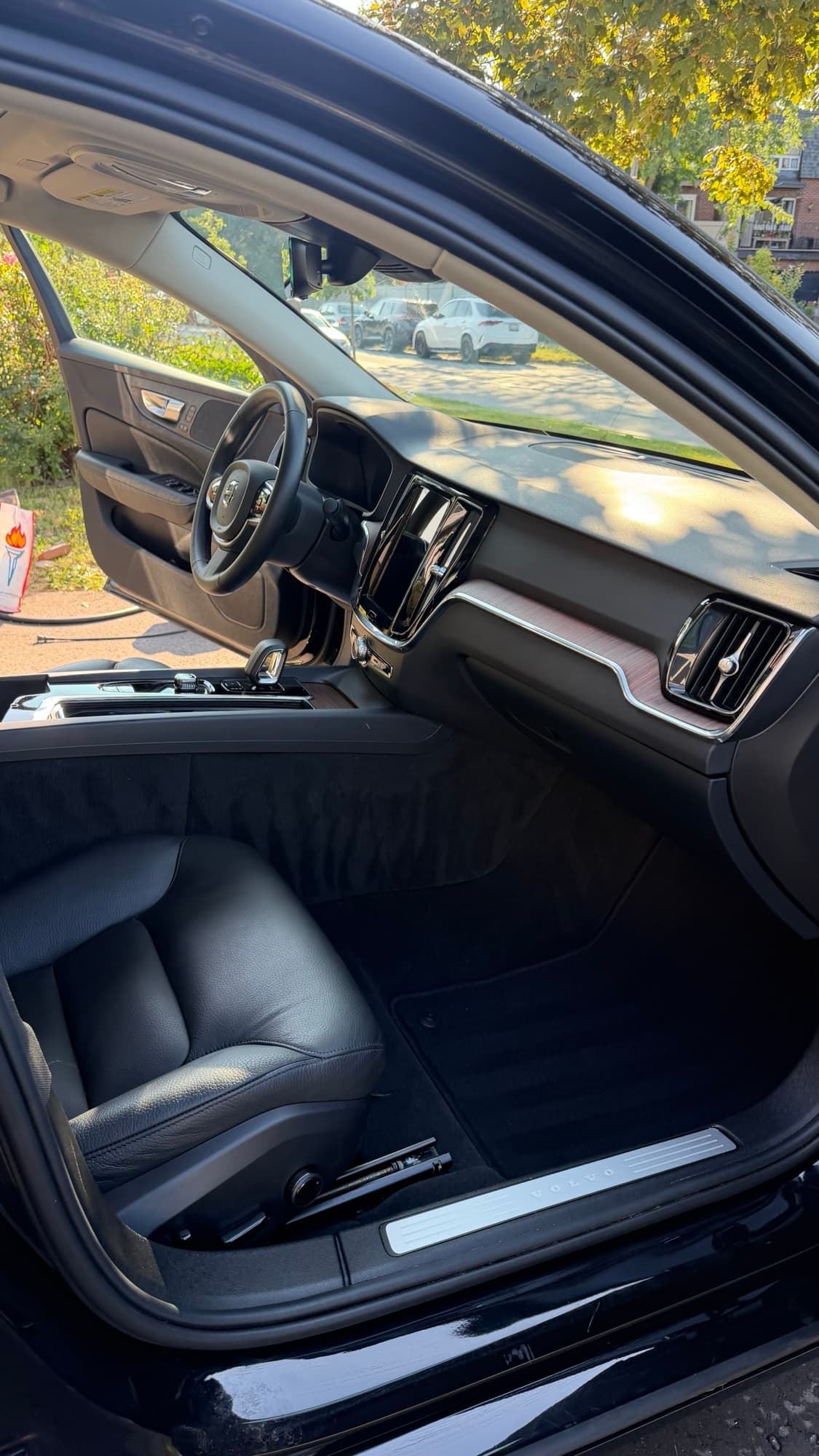
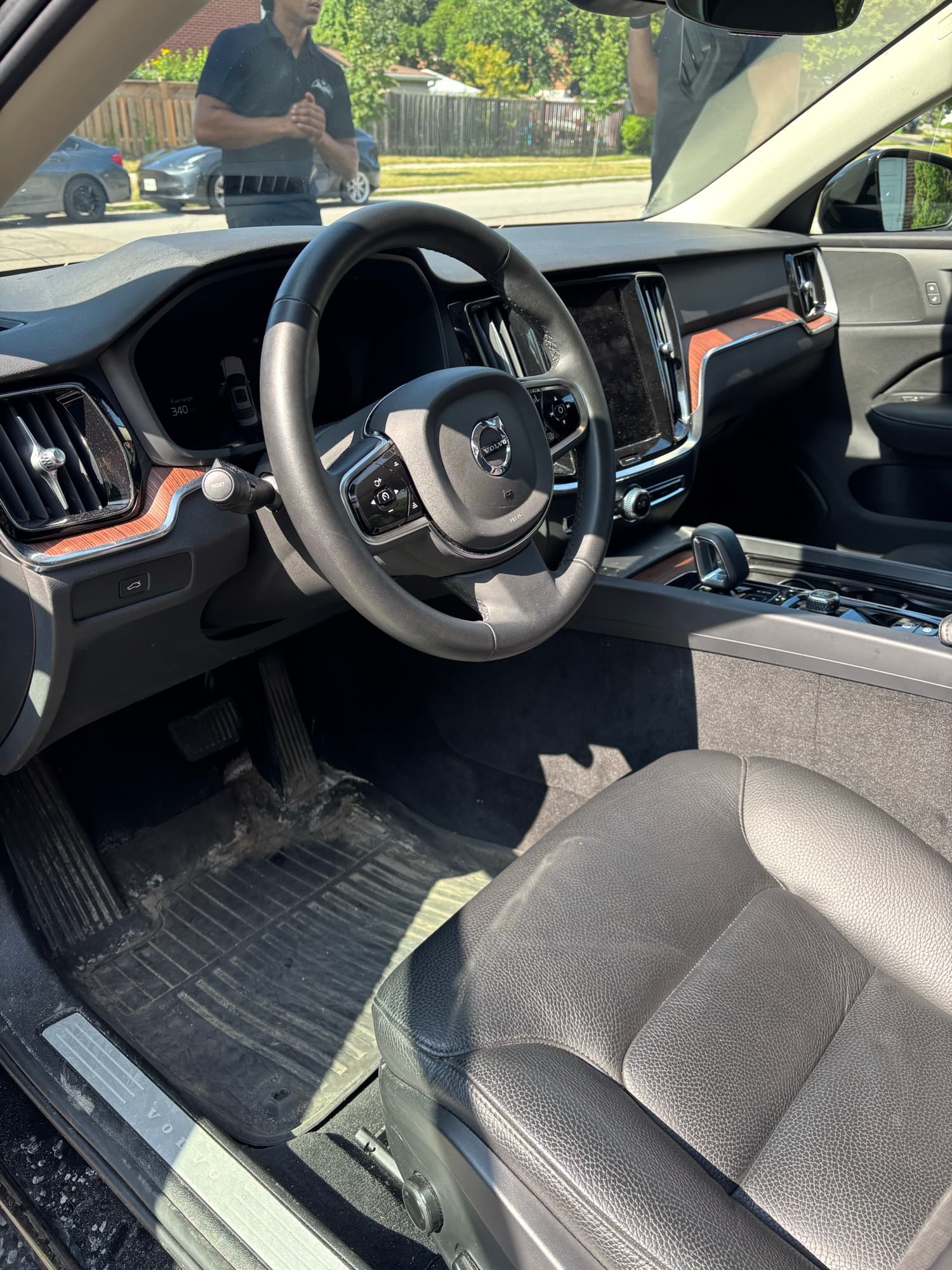
Six shots covers it:
- The driver’s footwell, mat in place, door open so the light gets in.
- The rear footwells and the back seat, including the seam where the seat back meets the base.
- The trunk floor, with anything loose lifted out.
- The dash, console, cupholders and vents, from the driver’s seat.
- One wide shot of each side of the car in daylight.
- The wheels, close enough to see the faces and the inner barrels.
If the car has damage you already know about, like a chip, a scuff on a wheel or a tear in the seat bolster, photograph it specifically and mention it before the work starts. That protects the detailer as much as it protects you, and any detailer worth booking will be glad you did.
Two questions to ask before you agree to anything
“Are you insured, and can you send me proof?”
This is the objection GTA locals raise first. In an r/Brampton thread where someone asked for a recommendation, one reply was: “Go to a shop. Those fb detailers are all amatures with no liability insurance.” Take that as a warning rather than a verdict, because it is easy to check and it is the reason to check.
Two kinds of cover matter when someone is working on your car in your driveway. General liability covers damage to property, and garage keepers covers a customer’s vehicle while it is in the detailer’s care. Someone with neither is not necessarily bad at detailing, but if a hose catches your neighbour’s paint or a machine leaves a mark on your hood, you are in a personal dispute with an individual rather than making a claim.
Insurance is a document, so ask for the document. “Are you insured?” gets you a yes from everyone. “Can you text me a copy of your certificate before I book?” gets you an answer you can act on, and a business that carries it can send it in a minute. Asking is routine, and nobody who has the paperwork is offended by it.
SoloSpa carries general liability and garage keepers coverage, and Zachariah will send proof of coverage before you book if you ask.
“Is this number firm, or does it move once you see the car?”
A confident price quoted by someone who has never seen your car is a warning sign, and understanding why makes you harder to overcharge. Condition drives the work far more than the model does, so a number set in advance is either padded wide enough to cover the worst car that description could mean, or it is a starting figure that grows on the day. Neither tells you what you will pay.
What you want is a number confirmed after someone has looked at the car and before the work starts. What car detailing costs in Toronto goes through what actually moves that number, and what to compare when two quotes come back far apart.
What to check when the work is done, and in what order
Check while the person is still there. Once they have driven off, a missed door jamb becomes a text-message argument, and almost nobody bothers. Five minutes in the driveway is worth more than any review you could leave afterwards.
Do it in daylight, and work in this order, because the early items are the ones that get skipped most often.
- Open every door and look at the jambs and sills. These are invisible when the car is shut, which is exactly why they get left. Grit along the sill after a full detail tells you most of what you need to know about the rest.
- The wheels, past the faces. Faces almost always get cleaned. Look at the inner barrel behind the spokes, where brake dust bakes on, and at the tire sidewall.
- The lower sixth of the car. Behind the wheels, along the rocker panels, and the bottom edges of the doors and bumpers. All of it needs bending down to reach, and all of it shows road film first.
- The trunk, lifted. Under the cargo cover and into the spare wheel well.
- Inside, the tight spots. Seat rails and the channel underneath the seats, the gap between the console and the seat, the bottom of the door pockets, cupholders, and the vents.
- The glass, at eye level and against the light. Smearing only shows at an angle. Drop each window a couple of inches and check the strip that normally hides inside the seal.
Then use your photos. Open the before shot of the driver’s footwell next to the footwell in front of you. That comparison takes ten seconds and it answers the question this whole page is about.
One more: if there is a strong fragrance, ask what it is covering. A pleasant smell is a normal finish to a job, but a heavy one applied over an odour that has not been dealt with will be back within a week.
What “good” honestly means for your car
The most useful line in any of these threads is “It’s all relative to the cost and the condition.”
Both of the disappointed customers in the threads we sampled had expected to collect a car that felt brand new. That expectation is where a lot of the anger comes from, and setting it correctly is worth as much as any inspection step above.
A detail is a deep clean, not a restoration. Some things do not come out at any price, on any booking, from any detailer:
- Dye stains that have set, and worn or thinning fabric.
- Cracked or sun-damaged plastic and vinyl.
- Scratches deep enough to catch a fingernail, and etching through the clear coat.
- Swirl marks in the paint, which need machine paint correction. That is a different service, and SoloSpa does not offer it. If that is what your car needs, you want a paint-correction specialist rather than a detail.
So the test is not whether the car looks new. It is whether everything that could have been cleaned was cleaned, and whether the finish matches what was described to you before the money was discussed.
Which points at the strongest signal on this page: a detailer who tells you what will not come out, before starting, is showing you the thing that is hardest to fake. Anyone can promise a result. Naming the limits costs the person saying it something, and that is why it is worth listening for.
If you think you were shortchanged
Say it there and then, and be specific. Point at the door jamb, show the before photo, and ask for that item to be redone. Most of these disagreements turn out to be about what was included rather than about effort, and a lot of them are solvable in ten minutes while the kit is still out of the van.
If the answer is that the item was never in scope, that is worth knowing too, and it is an argument for getting the scope in writing next time.
Common questions
Should the detailer send me before and after photos?
Plenty of good ones do, and it is a fair thing to ask for. Treat your own photos as the record, though, because they are the ones taken from your position and at a time you can vouch for. Being straight about our own: the SoloSpa portfolio currently has one matched before-and-after pair on it, a Volvo interior from a July 30 job. The other jobs on that page are shot after the work only, and they are labelled that way rather than presented as transformations.
How long should a detail take?
Long enough that the answer is a range, not a number, because condition and vehicle size both move it. The time ranges Zachariah works to are published on the quote page for each level of service, and heavier soiling or a bigger vehicle adds to them. A detail quoted at a suspiciously short duration is worth asking about, because time on the car is most of what you are buying.
Is a mobile detailer worse than a shop?
The location is not what decides it. The same questions apply either way: proof of insurance, a scope you have seen written down, a price confirmed after someone looked at the car, and your own before photos. Ask them at a unit on an industrial road and ask them in your driveway.
If you want SoloSpa to be the one you run this checklist on, send the car, your city and whatever has been bothering you about it on the quote form. Zachariah looks it over at no charge, then replies himself with one firm number and the next open slot near you.
More in Learn.
Get your quote
Get the car looked at first.
Send the car and your city. Zachariah looks it over at no charge and replies himself with one firm number and the next open slot.